Each place, each time, waymark the stories of our lives. Like a pebble plucked from a beach, or a feather caught on a sleeve, we carry them with us, wishing to hold on to something that has passed.
Ian Grosz. Mealldroma: A Search for Home, UoA, 2023.
“I’m interested in history because it informs the present and can help guide how we respond to the future. I’m not interested in history for history’s sake, or heritage for heritage’s sake. What interests me are the stories they tell us about who we are and how we got here.”
I was invited to talk with Open Road recently for their ‘We’ve been talking to…’ blog series, and had a great chat with Dr Lucy Stroud about who I am (ain’t that a difficult one…), what I do, what stories I think are important to preserve from the past, and what I hope for the future.
Open Road are a great organisation, pulling together stories, places, and communities. They’re passionate about storytelling and giving people voice. They believe that understanding the past can inspire change in the here and now and help build a better future.
You can find out more about Open Road and read the interview here.
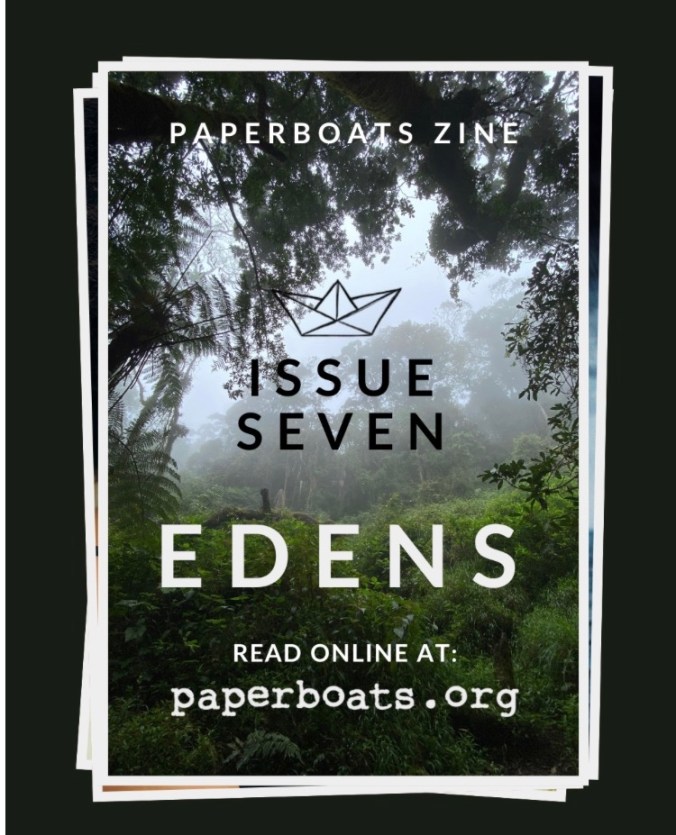
I’ve been involved with the Paperboats Writers Collective for a few years now – a group of writers focussed on Nature and Environment at this time of ecological and climate breakdown – and I am very happy to have a poem featured in the latest Issue of the Paperboats E-Zine.
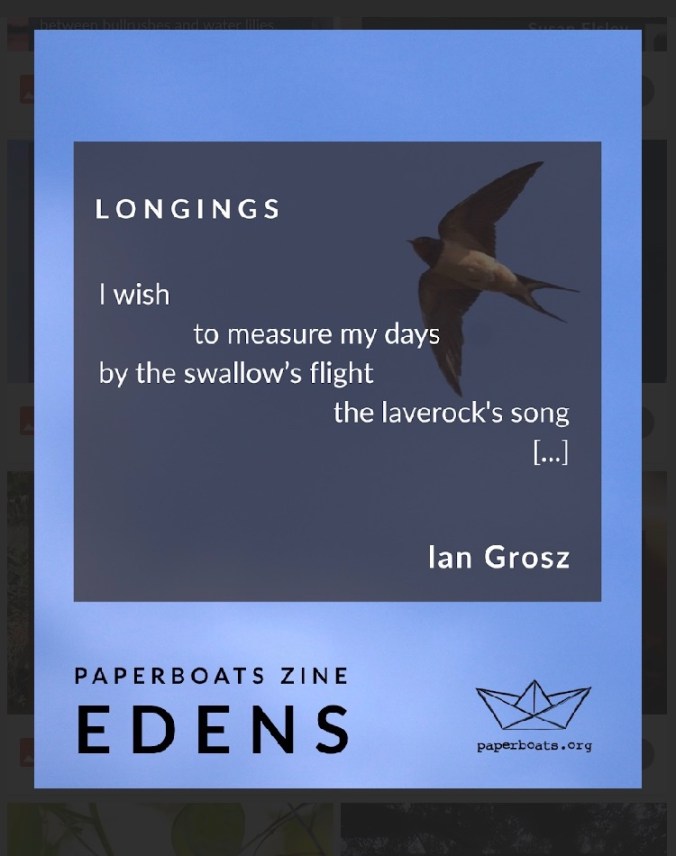
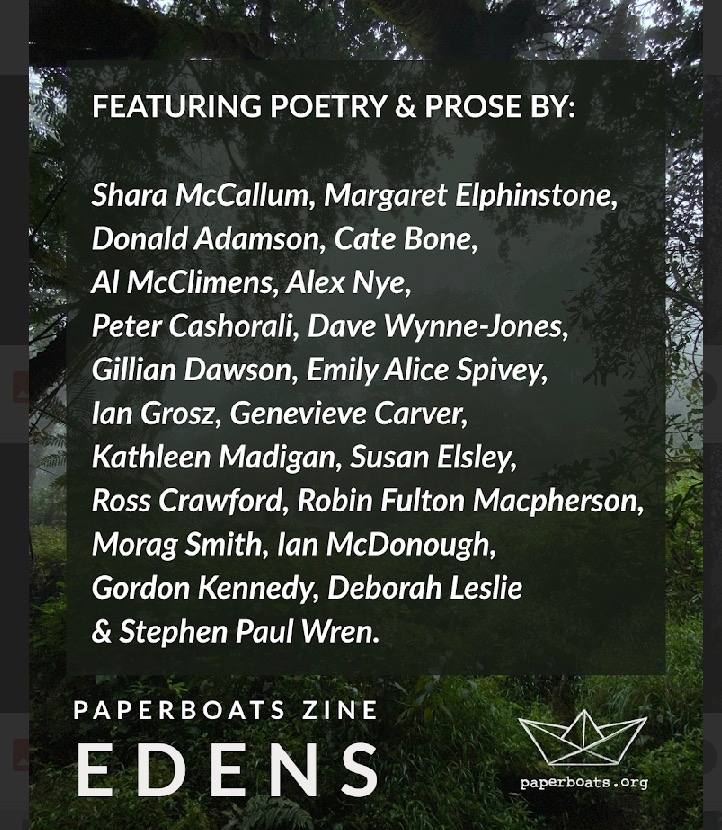
This issue revolves around the theme of Edens – Edens lost but also Edens hoped for or imagined, and grounded in the reality of the world we live in. My poem ‘Longings’ responds to this idea and I’m flattered that it has been included alongside such great company.
Edited by Laura Fyfe and Chris Powici with cover and graphic design by Sandy Winterbottom, you can read Edens over at Paperboats Writers
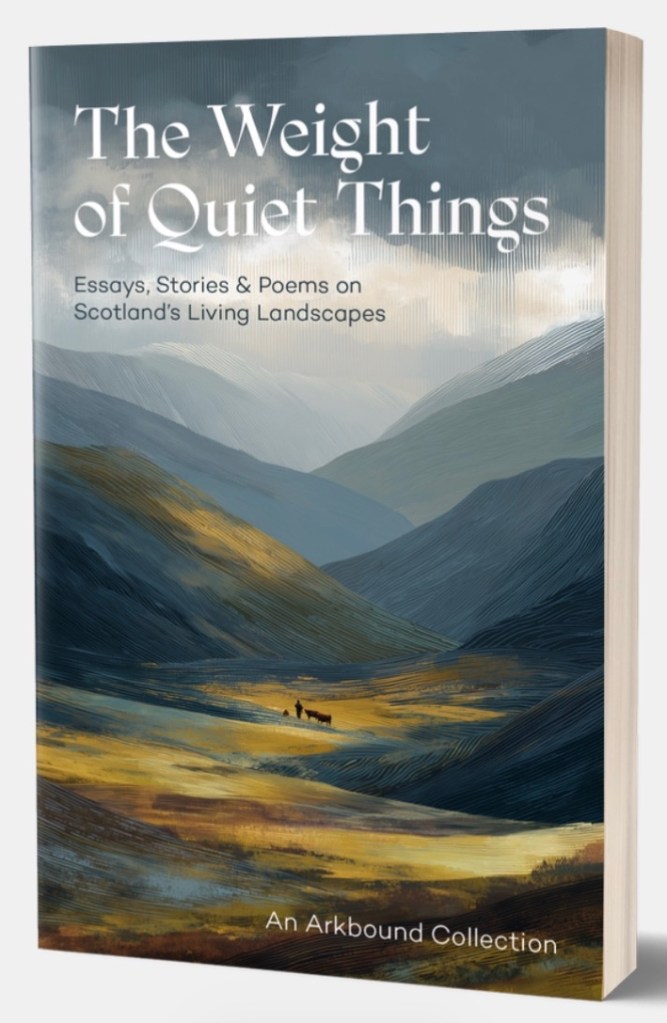
It’s great to see this anthology come into the world and to have a contributing essay within its pages.
Published by the wonderful Arkbound UK,’The Weight of Quiet Things gathers essays, stories and poems that explore the deep, enduring relationship between the Scottish landscape and its people.’ Edited by Bridget Reaume, this is a collection ‘about what we take from the land, what the land takes from us and the weight of what remains.’
My essay ‘A Bridge to Nowhere: Land Use and Misuse on the Isle of Lewis’ comes out of a return visit to the Isle of Lewis where I lived for a time in the early noughties. As an incomer, I wanted to understand more about the island’s history and culture, and how the legacies of the past continue to shape its identity today. An abandoned bridge project spearheaded by Lord Leverhulme as part of his ambitious plans to commercialise the islands in the years following WWI seemed emblematic of both the misplaced good intentions of the outsider and the spirit of the islanders themselves.
The collection is published in April but you can order ahead at the presale link below:
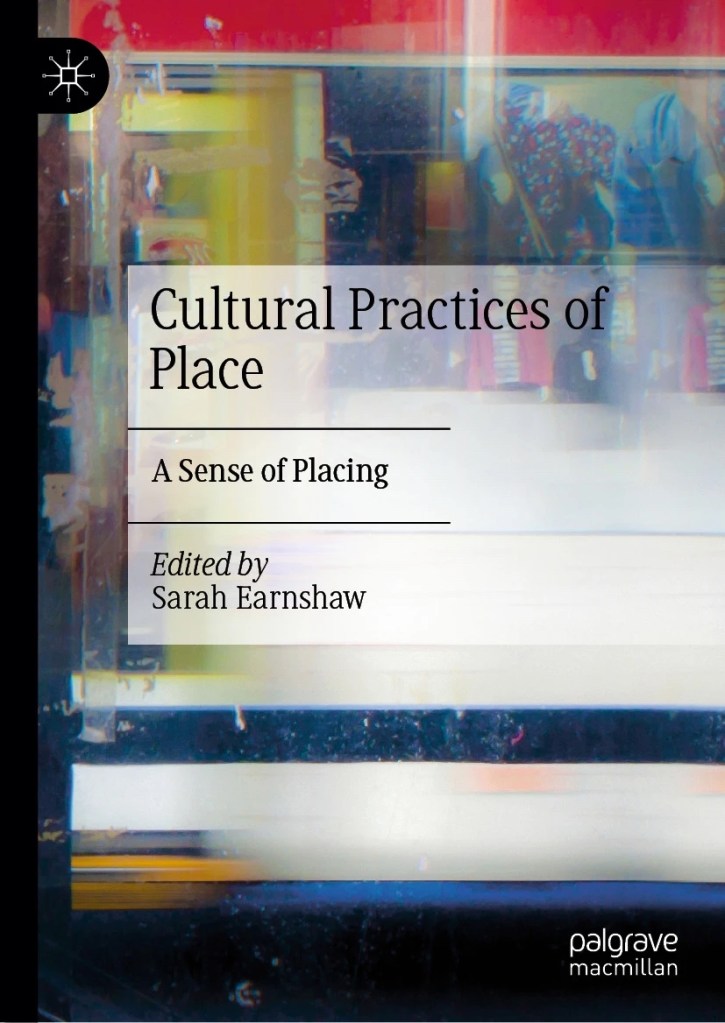
Some of the output of the critical component of my PhD project is a chapter in this book of collected essays, edited by Sarah Earnshaw and published just this month by Palgrave Macmillan:
Things take a long time in academia and it’s great to see this out in the world three years on from its origins at the ‘Here, There, and Somewhere In-between: Practicing, Placing, Configuring’ conference at the Practicing Place Centre, University of Eichstätt-Ingolstadt, in November 2022.
The collection pulls together contributions from literature and the humanities, the social and political sciences, and cultural studies, to offer a truly multidisciplinary examination of the different ways place features, and is expressed, in our lives.
Cultural Geographer Tim Creswell, writes in the Afterword:
‘Collectively, these essays make it clear that thinking about place, and specifically its links to practice, is an intellectually ongoing business that brings a conceptual and political liveliness to the ways we contemplate and act in the world.’
Place for me is at the heart of things, and my contribution explores the methodology of relating place to self through a creative practice and others’ lived experience.
From the Introduction by Sarah Earnshaw:
‘Ian Grosz […] embarks upon an interdisciplinary reflection on his autoethnographic creative writing practice in Chapter 9 to explore the role of landscape in individual and collective senses of place, and thus, in the formation of identity […] Weaving perspectives from social scientific literature with [British] nature writing alongside his personal narrative with the stories of interview partners, Grosz’s contribution exemplifies the dynamic and relational practices of place through an inquiry on the bread and butter of knowledge production—narrative writing, the stories we tell and share.’
I feel very privileged to feature in this collection of essays and to have met the people in and behind its publication.
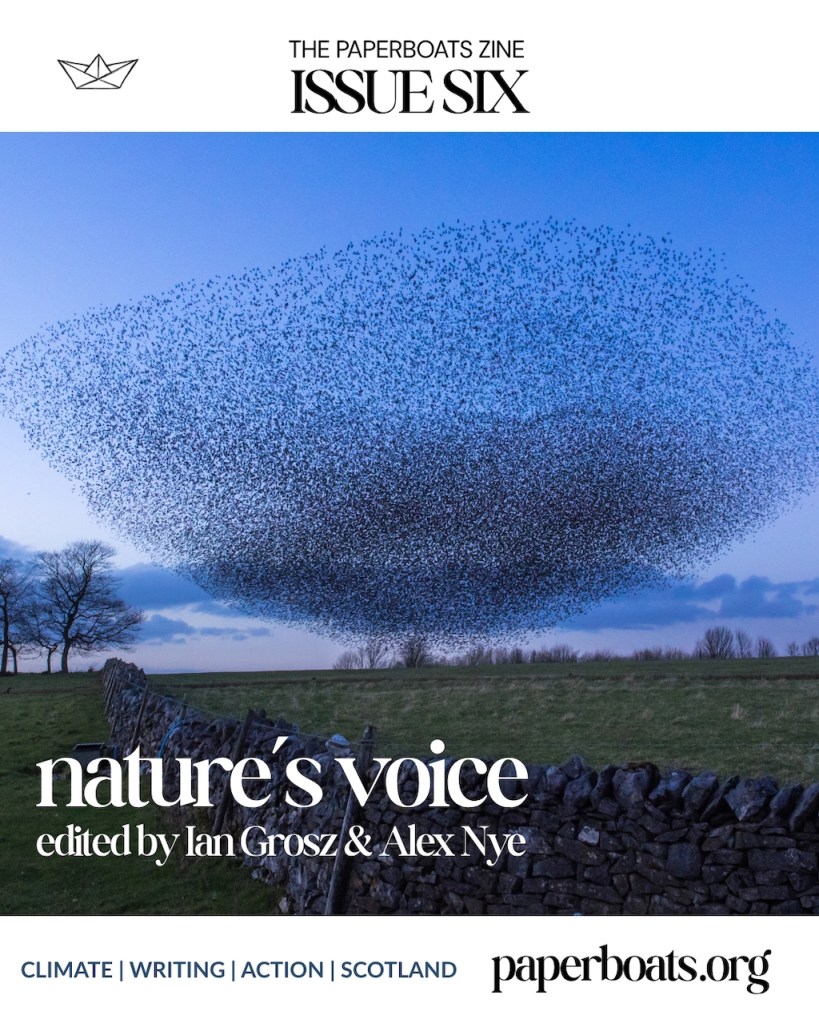
The issue incudes such a great range of thought-provoking writing by a diverse group of wonderful writers, all responding to the issue theme of ‘Nature’s Voice’ in inspiring and imaginative ways.
In poetry and prose, our contributors bear witness to the vulnerability of birds and other animals; the human impacts on climate and environment; hear the imagined song of trees; give voice to glaciers and storms, mosses and lichen. We learn of grass-roots efforts to respond to the threat of extinction, and we recognise the need to pause and to listen, to take note and act before it is too late.
We are particularly delighted to feature specially commissioned work by poet, artist and curator, Madhu Raghavendra, who was awarded the Charles Wallace Writing Fellowship at Stirling University in 2024.His opening poem ‘Orbit’ sets the scene and encapsulates the themes of this issue perfectly.
Please do grab a cuppa and enjoy a great read by going to the link below.